Object Lock (WORM)
Stop files from being changed or deleted until a date you choose.
Object Lock keeps file versions in WORM mode (write once, read many): a locked version cannot be deleted or overwritten until its lock ends. Use it for backups that a mistake or ransomware must not wipe out, and for records you must keep for a set time.
You can only turn on Object Lock when you create a bucket. It can never be turned off, and versioning stays on for the life of the bucket. To protect files in an existing bucket, create a new bucket with Object Lock and copy the files into it.
Turn on Object Lock
When you create a bucket, on the Versioning step turn on Enable Versioning, then Enable Object Lock. You can set a default retention there too, or later in the bucket settings.
With the AWS CLI and the account owner's key:
aws s3api create-bucket --bucket my-locked-bucket --object-lock-enabled-for-bucket --profile zata
Choose a protection
Each file version can have a retention (in Governance or Compliance mode) and a legal hold, alone or together.
| Governance | Compliance | Legal hold | |
|---|---|---|---|
| Ends | On the retain-until date | On the retain-until date | When you turn it off |
| Delete the version early | The account owner can, after typing CONFIRM. In Indore, so can sub-users who may delete file versions. | Nobody: not you, not Zata support | Turn off the hold first |
| Make the lock longer | Yes | Yes | Not needed |
| Shorten or remove the lock | Not in the console | Never | Turn it off at any time |
| Good for | Backups, and testing Object Lock | Records you must keep by law or contract | Keeping files during a dispute or investigation |
Start with Governance. You can change a version from Governance to Compliance later, but never back.
How long you can lock files
The console will not lock files past the date your data is guaranteed to be kept. That date depends on your account:
| Account | Latest date the console accepts |
|---|---|
| Paid plan | The end of your current billing period, plus the 90 days that data is kept after a plan expires (see Billing) |
| Trial | The end of the trial, plus 30 days |
The console shows the limit next to the field, for example Retention is limited to 136 days by your billing lifecycle. A Compliance default retention can be at most 90 days (30 days on a trial), because it locks every future upload. Renewing your plan moves the limit forward. If your plan or trial has already ended, the console cannot set new locks.
Set a default retention
A default retention locks every new upload automatically, in the mode and for the number of days you choose. Files uploaded by any S3 tool are locked too. Without a default retention, new files are not locked.
Open the bucket's settings and expand Object Lock.
Under Default Retention, choose Governance or Compliance, enter the number of days and select Apply Changes.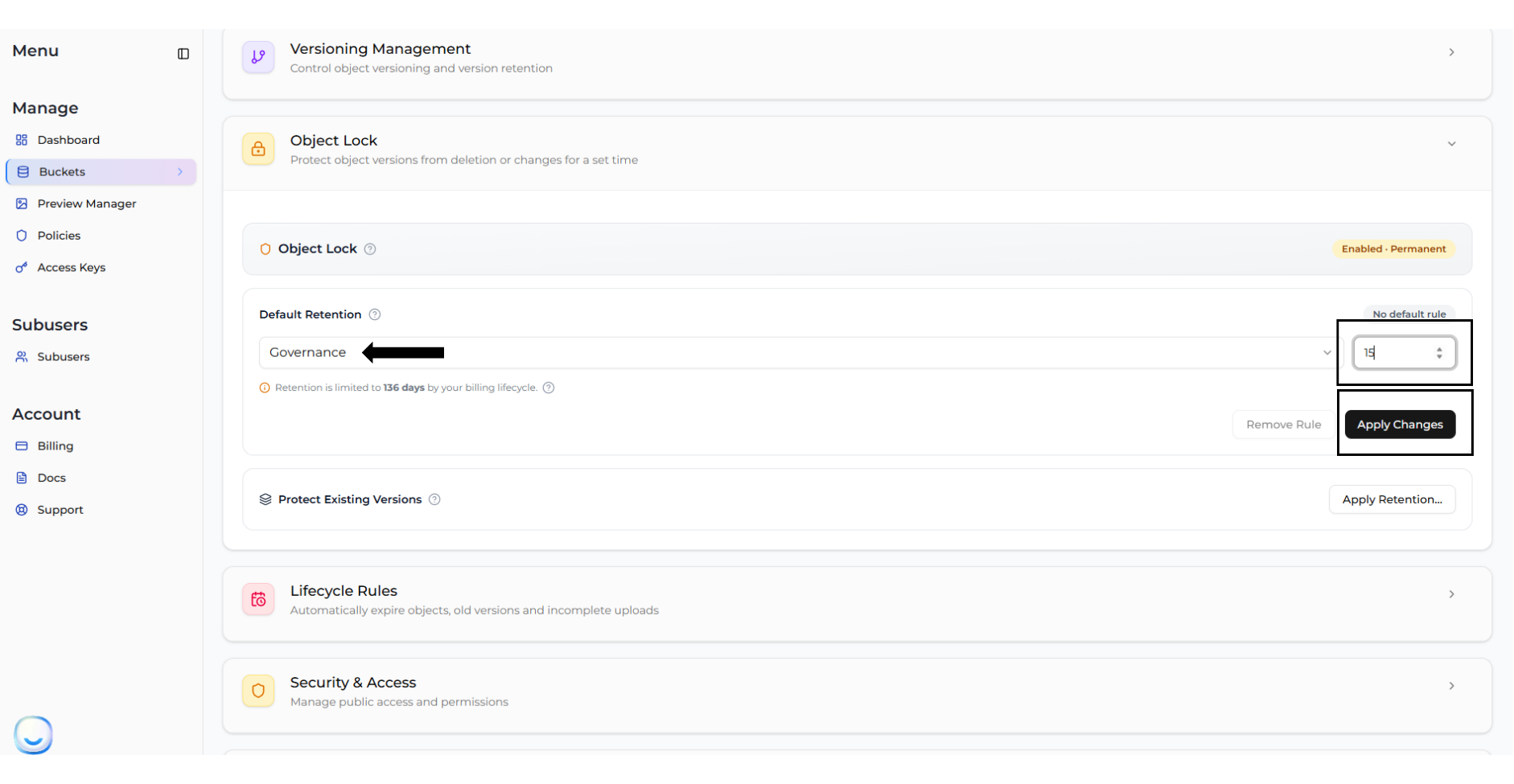
Type CONFIRM and select Apply Retention. The section now shows the active rule, for example Active · Governance · 15 days.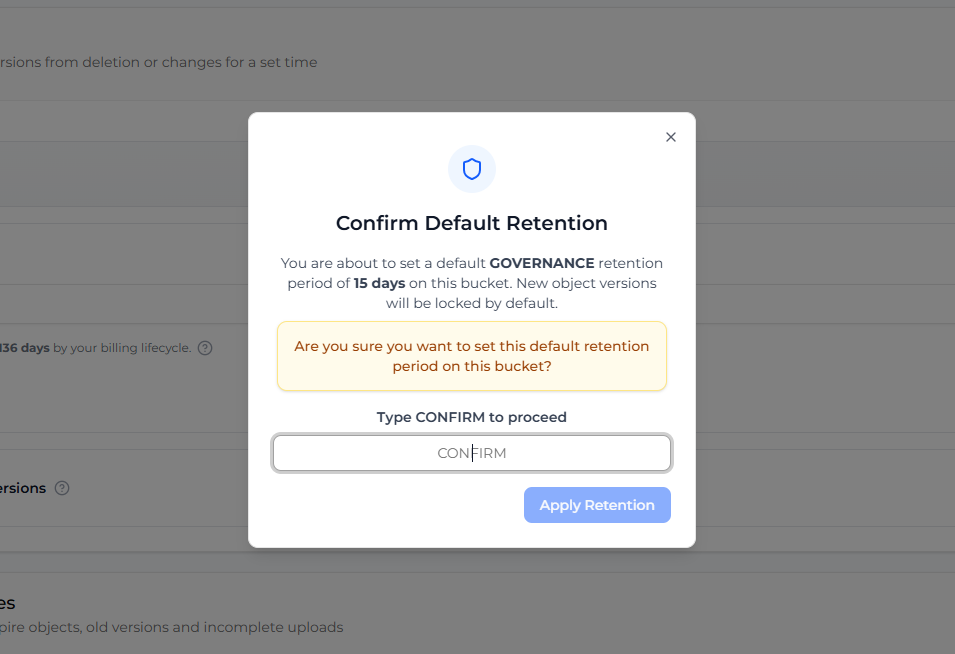
The default retention only applies to files uploaded after you set it. To lock files that are already in the bucket, see the next section.
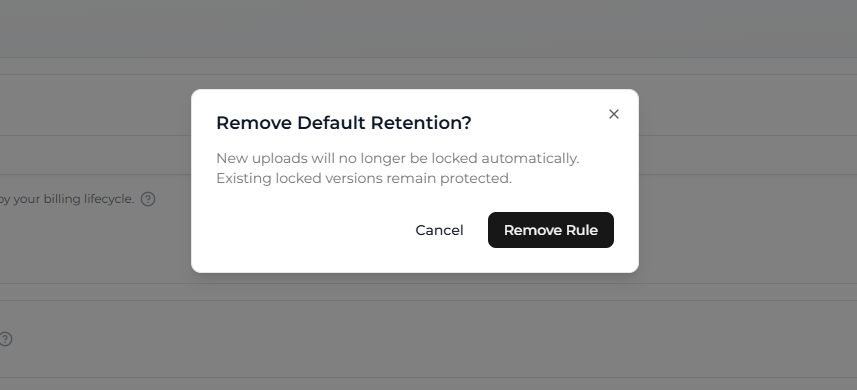
To stop locking new uploads, select Remove Rule and confirm with Remove Rule. Versions that are already locked stay locked.
Lock existing versions
You can lock every version in the bucket that has no active lock in one go. Versions that are already locked are not changed.
In the bucket's settings, under Object Lock, select Apply Retention... next to Protect Existing Versions.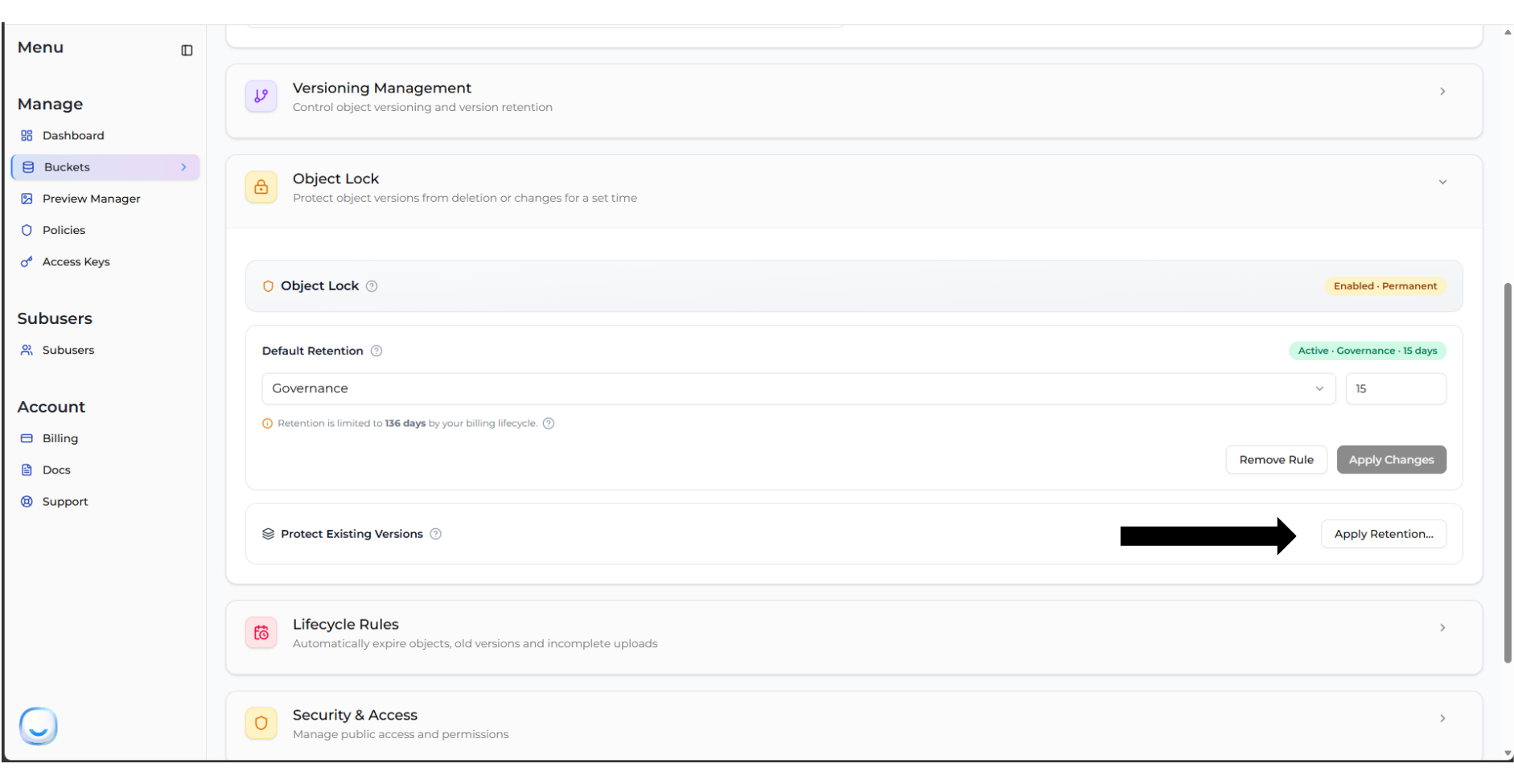
Or open the bucket, turn on Show Versions and select Protect All.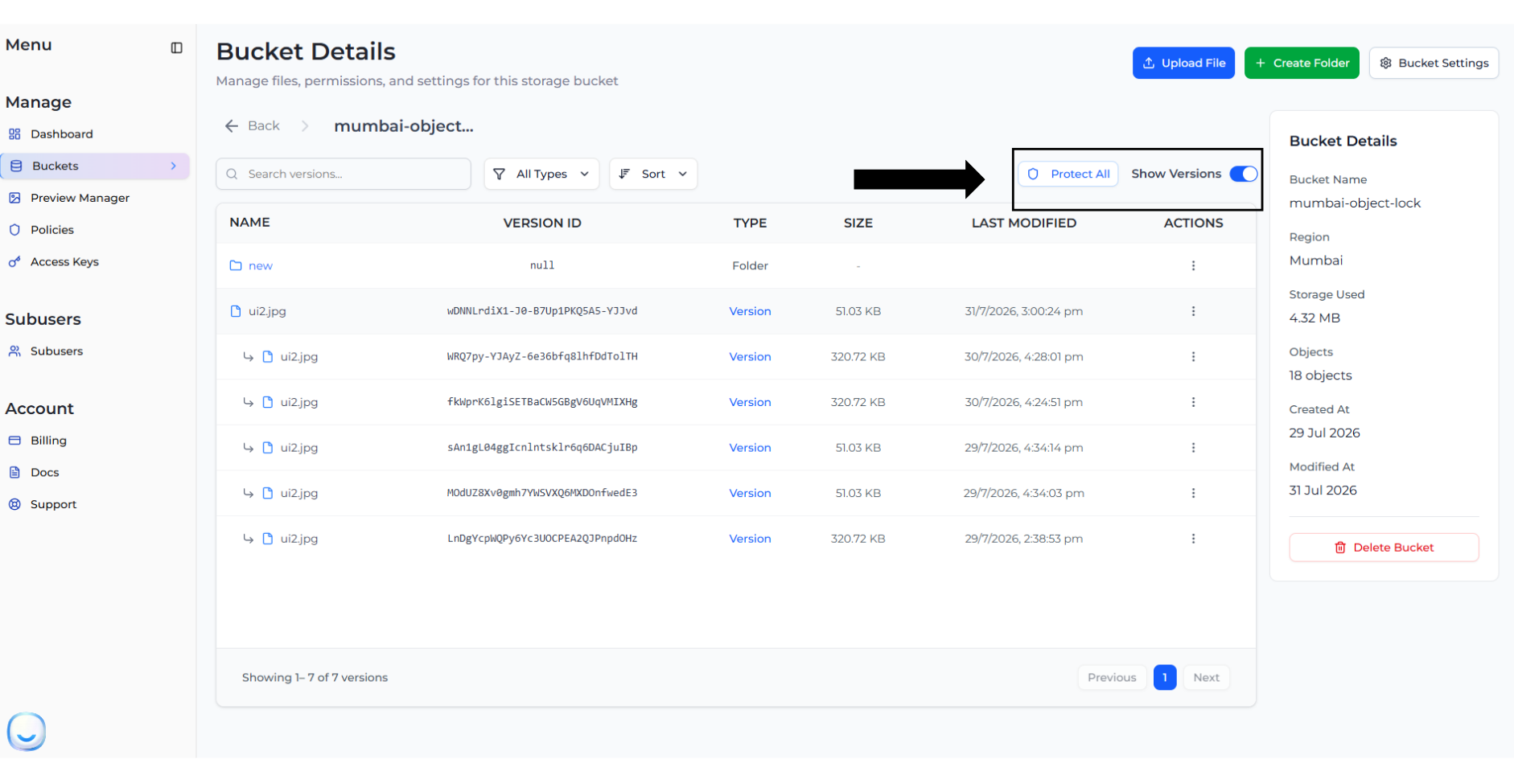
In Protect Unprotected Versions, choose the Retention Mode and enter the Retention Period (Days), counted from today. Select Continue.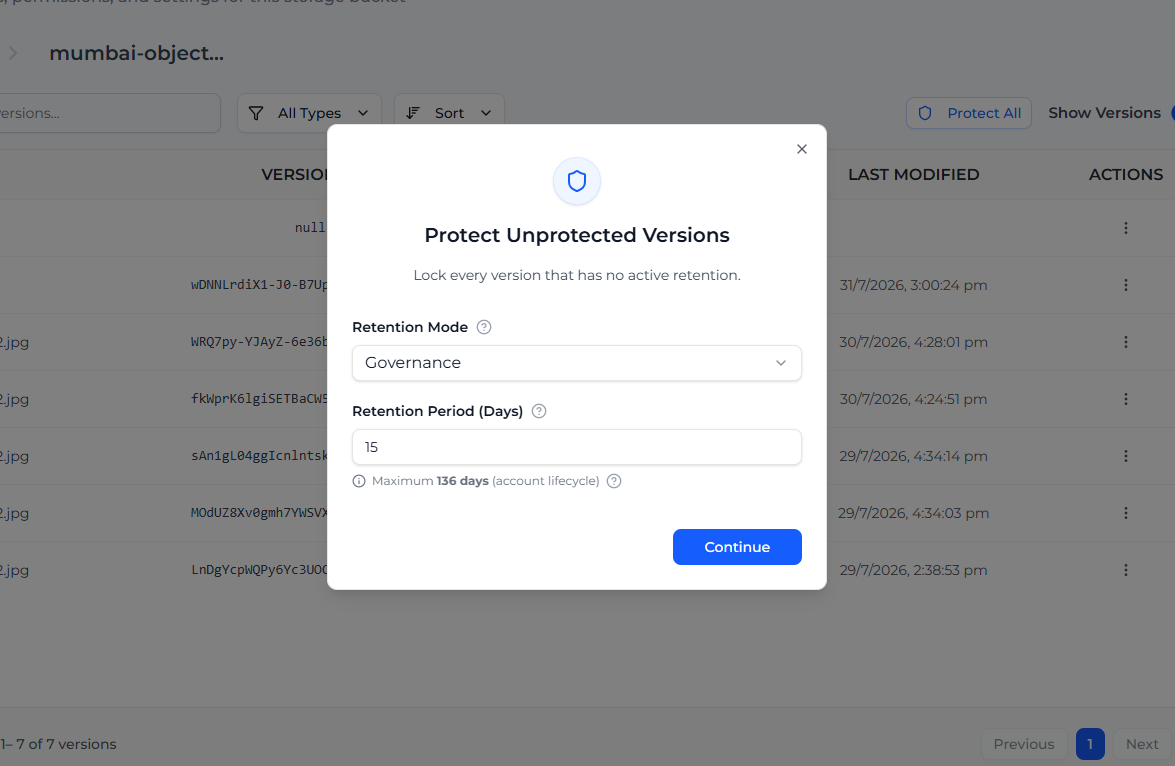
Check the summary, type CONFIRM and select Apply Retention. The console locks the versions in the background, so you can close the window.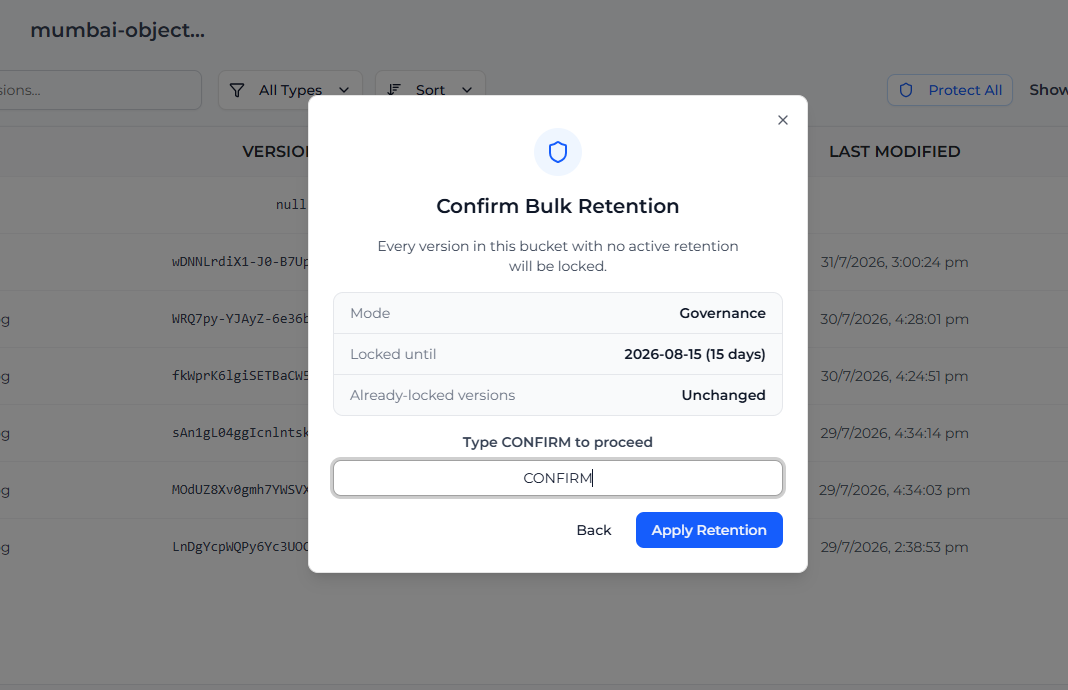
Lock or change one version
Open the bucket and turn on Show Versions. Open the ⋮ menu of the version and select Lock Settings.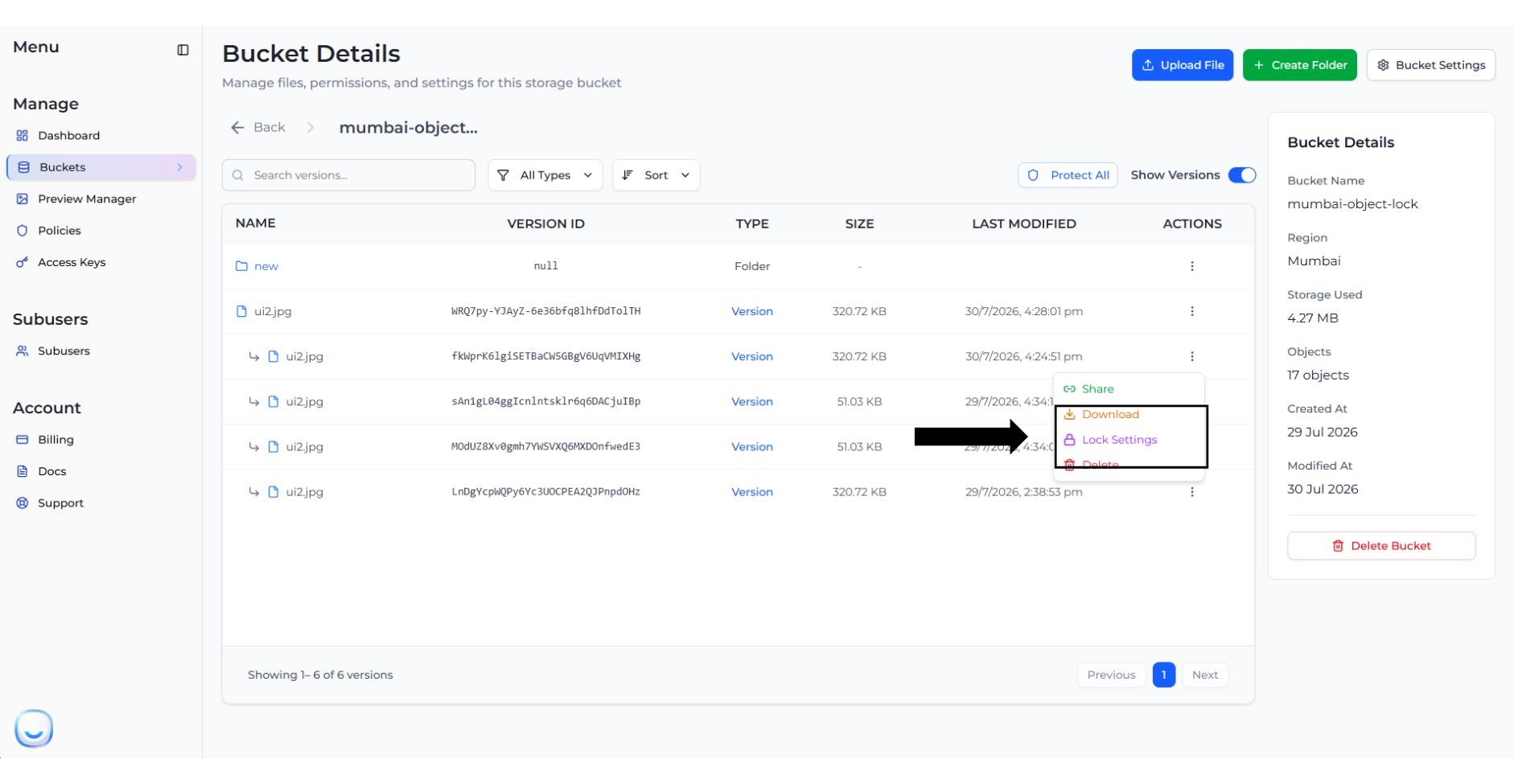
The Version Details panel shows the version's Retention and Legal Hold. Under Retention, select Apply (no lock yet) or Edit (already locked).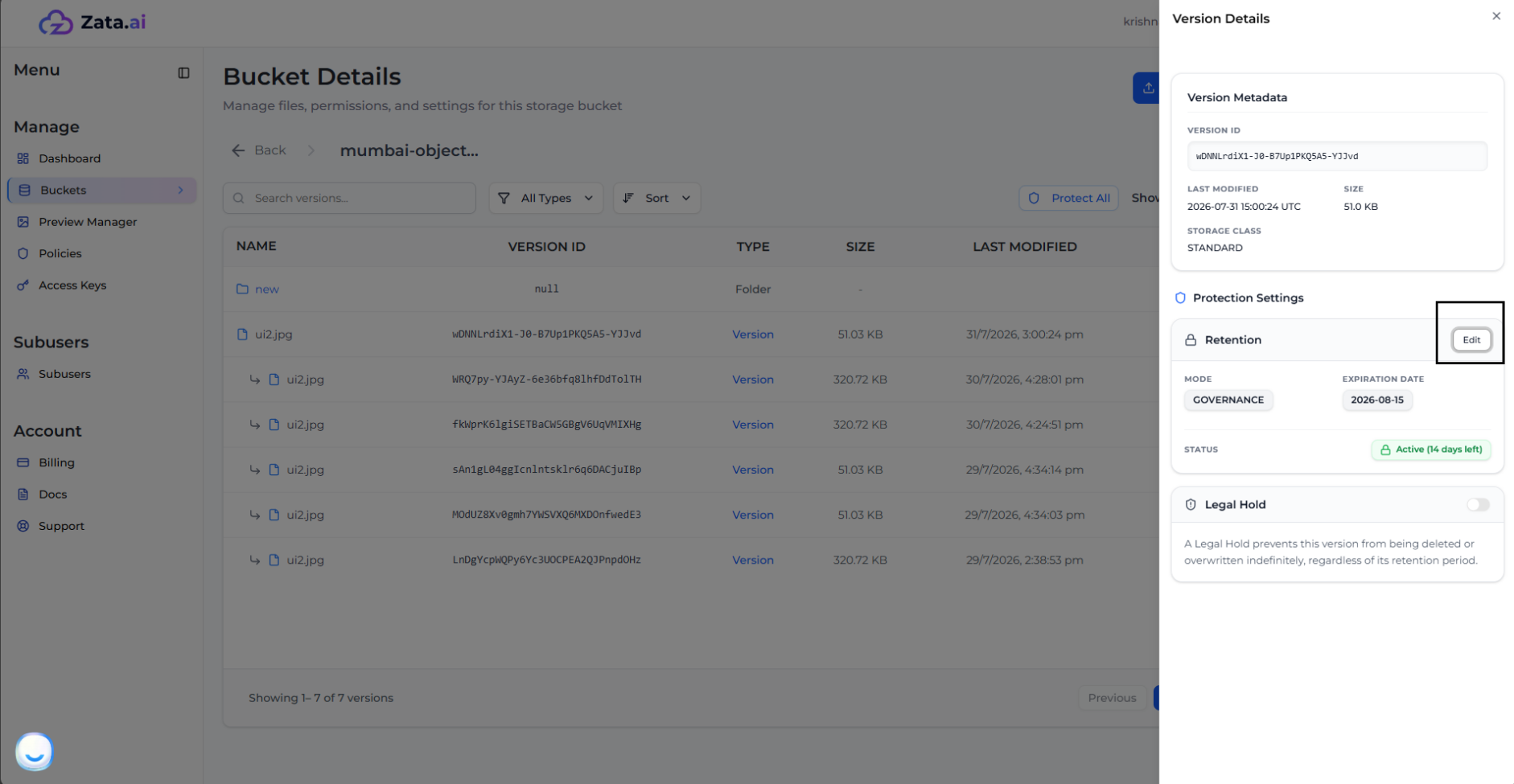
Choose the Mode and enter Retain Until (Days from now), then select Save Retention. You can make a lock longer, or change Governance to Compliance. You cannot make a lock shorter.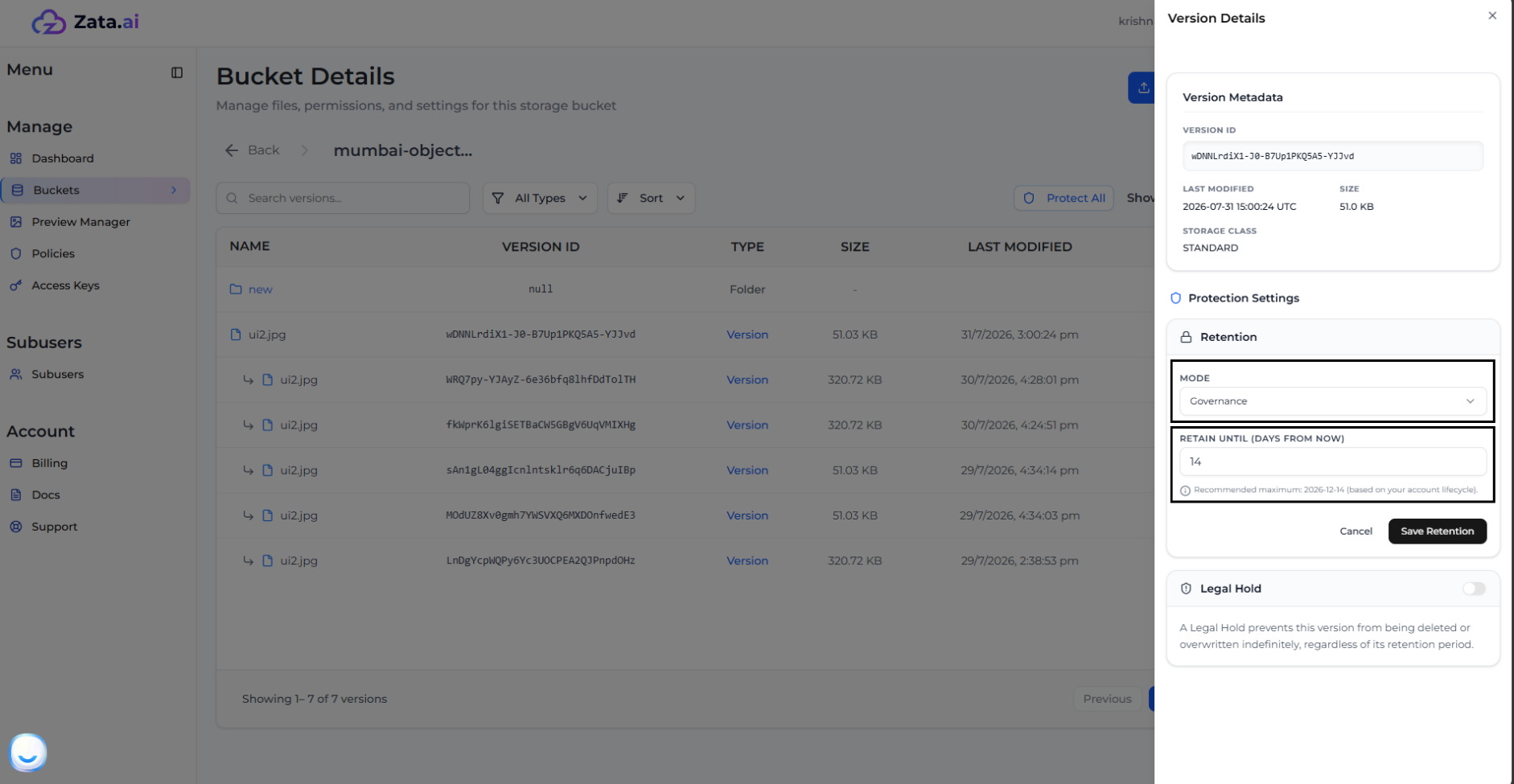
In Confirm Retention Settings, select Confirm.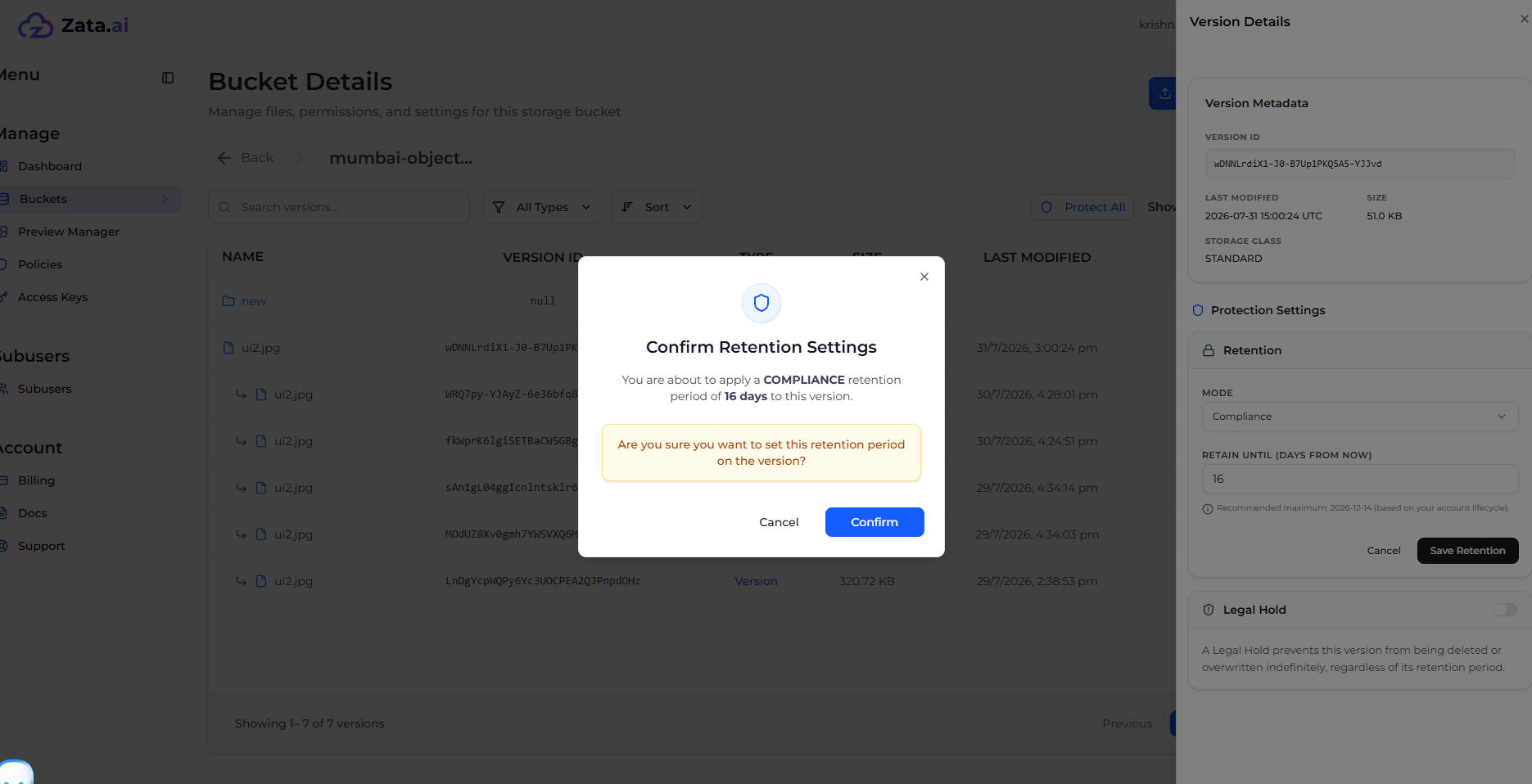
To put a legal hold on a version, see Legal hold.
What Object Lock changes in the bucket
- Deleting a file in the normal file list only adds a delete marker. The locked versions stay, and you can restore the file.
- Overwriting a file creates a new version. The locked version stays.
- Versioning cannot be turned off.
- Lifecycle rules skip locked versions until their lock ends.
- Delete All Contents is not available when you delete the bucket. Delete the files once their locks have ended, then delete the empty bucket.
- Sub-users cannot change Object Lock settings unless the owner has given them those permissions.
Check locks with the AWS CLI
# The bucket's default retention rule
aws s3api get-object-lock-configuration --bucket my-locked-bucket --profile zata

# The lock on one file
aws s3api get-object-retention --bucket my-locked-bucket --key myfile.txt --profile zata
ObjectLockConfigurationNotFoundError from get-object-retention means the file has no lock, or the bucket was created without Object Lock.
To check that a backup tool works with Object Lock, use a new test bucket, never one with real data. Lock a test file for a short time in Governance mode, then try to delete that version with the tool: it must be refused.